
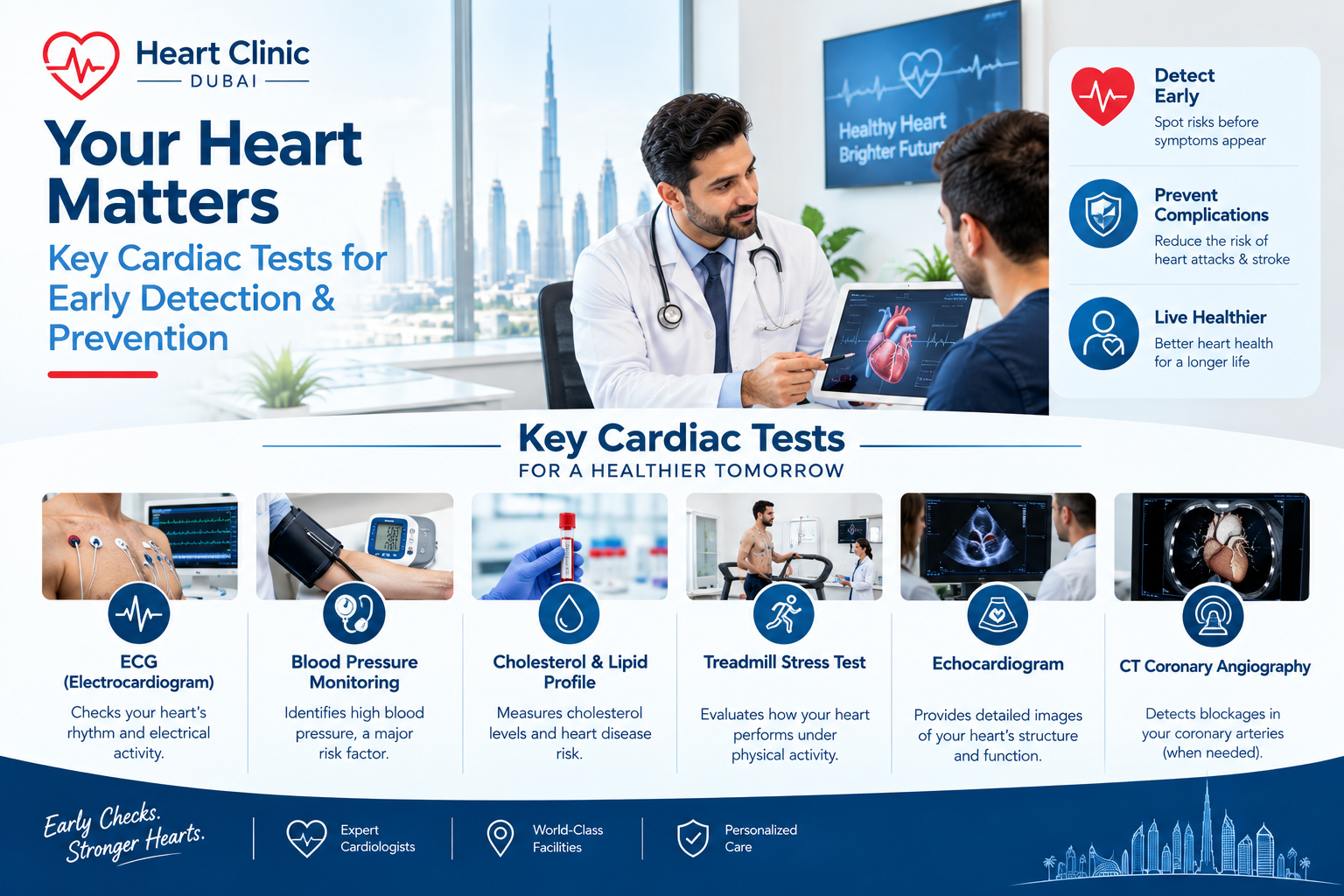
Introduction Heart disease often develops silently for years before any symptoms appear, which is exactly why early detection through proper testing matters so much. A dedicated Heart clinic in Dubai offers the specific tests needed to catch problems before they become serious. This blog covers the key cardiac tests that support early detection and prevention. Why Early Detection Matters So Much for Heart Health Many risk factors for heart disease, including high blood pressure and elevated cholesterol, produce no noticeable symptoms in their early stages. Left unaddressed, these silent risk factors can gradually damage the cardiovascular system, making early testing one of the most effective tools available for preventing serious cardiac events later in life. What Heart Health Checks Should People Get Regularly Before Symptoms Develop Regular blood pressure checks, cholesterol and lipid panel testing, blood sugar screening, and an electrocardiogram to assess heart rhythm form the foundation of preventive cardiac care. Depending on age and risk factors, additional tests like a stress test or echocardiogram may also be recommended even before symptoms appear. Basic Screening Everyone Should Have Blood pressure measurement at every routine checkup Cholesterol and lipid profile testing periodically Blood sugar testing to screen for diabetes-related heart risk Resting electrocardiogram to check heart rhythm Body mass index and waist circumference assessment More Advanced Cardiac Testing For individuals with risk factors like family history, high blood pressure, or diabetes, more advanced tests such as a treadmill stress test, echocardiogram, or coronary calcium scoring may provide deeper insight into heart health than basic screening alone. A Cardiologist in UAE can determine which of these tests are appropriate based on your specific risk profile. What Heart Tests Should I Get Before I Have Any Symptoms For most adults without symptoms, starting with blood pressure, cholesterol, and blood sugar screening in their thirties, combined with a baseline ECG, provides a solid foundation. Those with family history or other risk factors often benefit from earlier and more frequent advanced testing, even in the complete absence of symptoms. Understanding Your Personal Risk Factors Family history, lifestyle habits, weight, and existing conditions like diabetes or high blood pressure all influence how aggressively cardiac screening should be pursued. A thorough conversation with your doctor about these factors helps determine the right testing schedule for your specific situation rather than following a generic recommendation. Making Prevention a Consistent Habit Heart health testing works best as an ongoing habit rather than a one-time check, since risk factors can develop or change over time. Building regular cardiac screening into your overall healthcare routine gives you the best chance of catching issues while they remain easily manageable. How Age Affects Recommended Testing Testing recommendations generally become more frequent and comprehensive with age, reflecting the natural increase in cardiovascular risk over time, though individuals with strong family history or existing risk factors may need earlier and more frequent screening regardless of age. The Connection Between Lifestyle and Test Results Diet, exercise habits, smoking status, and stress levels all directly influence cardiac test results, meaning that testing also serves as valuable feedback on how well current lifestyle choices are supporting long-term heart health. What Happens When a Test Reveals a Concern When a screening test reveals an early warning sign, such as slightly elevated cholesterol or blood pressure, doctors can often address it through lifestyle changes and monitoring before medication or more intensive intervention becomes necessary. Making Heart Health a Family Conversation Given the strong role family history plays in cardiovascular risk, discussing your family’s heart health history openly with your doctor helps ensure your testing and prevention plan accounts for risks that might not be obvious from your personal health alone. Taking the First Step Toward Prevention Simply scheduling a baseline cardiac screening, even without any current concerns, is often the single most valuable step someone can take toward long-term heart health, since it establishes a reference point for tracking any future changes. Why Waiting Is the Riskiest Choice Postponing cardiac screening because symptoms have not yet appeared is precisely the mindset that allows silent risk factors to progress unchecked, making early testing one of the simplest and most effective health decisions available. A Small Investment for Long-Term Peace of Mind The time and cost involved in basic cardiac screening are minimal compared to the peace of mind, and potential life-saving early detection, that a thorough evaluation can provide. Conclusion Heart disease is far easier to prevent or manage when caught early, which is exactly what regular testing at a proper Heart clinic in Dubai makes possible. Understanding which tests matter most for your risk profile helps you stay ahead of potential problems. Zen Life Polyclinic’s cardiac team provides thorough, personalized screening designed for early detection and genuine prevention.