
Introduction
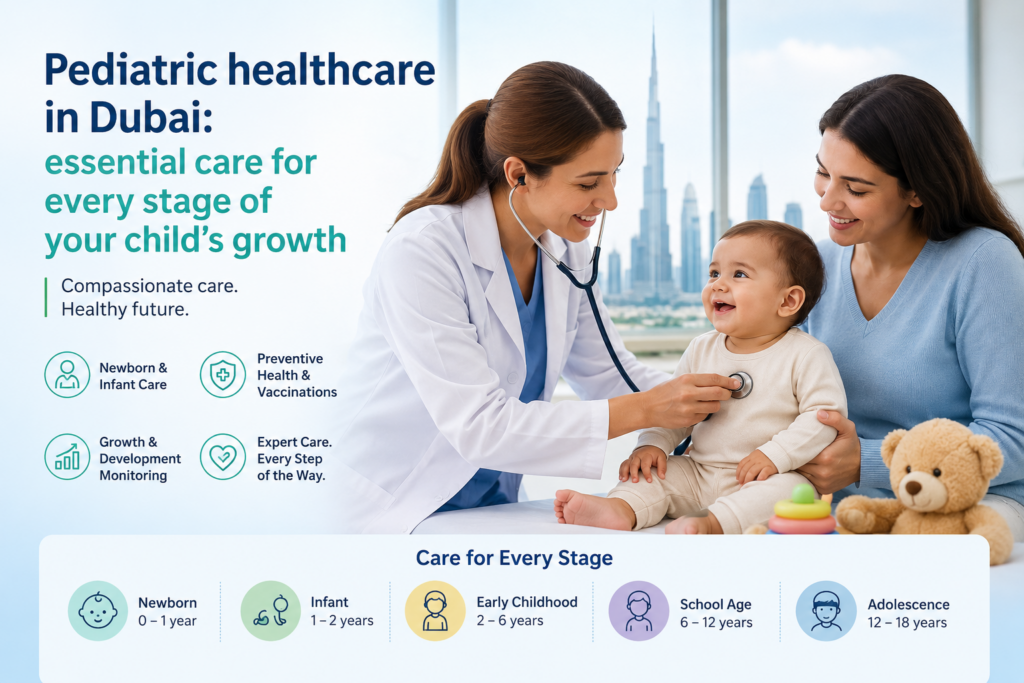
Children’s health needs change constantly as they grow, and what works for a newborn looks nothing like what a ten-year-old needs from their doctor. Good Pediatric healthcare services in UAE are built around this constant evolution, adapting care to match each stage of a child’s development. This blog walks through what essential pediatric care looks like from infancy through the teenage years, so parents know what to expect and when.
Why Pediatric Care Needs to Be Stage-Specific
A newborn’s body and immune system work very differently from a school-aged children, and treating every young patient the same way misses important developmental milestones and risk factors specific to each age group. Pediatricians are trained to recognize these differences and adjust everything from physical exams to vaccination schedules accordingly.
How Does Pediatric Healthcare Need to Adapt as Children Move Through Different Growth Stages
In infancy, care focuses heavily on growth monitoring, vaccination schedules, and early developmental milestones. As children move into toddler and school years, focus shifts toward nutrition, vision and hearing screening, and monitoring developmental and behavioral progress. During adolescence, care expands to include physical, emotional, and social changes, along with more independence in managing personal health.
Infancy: The Foundation Years
The first year of life involves frequent checkups tracking weight, height, and head circumference, alongside a structured vaccination schedule that protects against serious childhood illnesses. Pediatricians also closely monitor feeding, sleep patterns, and early developmental signs like rolling over, sitting up, and responding to sounds and faces.
Early Childhood: Building Healthy Habits
- Regular growth and developmental milestone tracking
- Continued vaccination schedule through early childhood
- Vision and hearing screening as children start school
- Nutrition guidance to support active growth
- Monitoring for early signs of allergies or chronic conditions
School Age: Growth, Learning, and Prevention
As children enter school, pediatric visits often shift toward monitoring how physical growth aligns with expected patterns, screening for learning or attention difficulties, and addressing common childhood illnesses that spread more easily in school environments. This is also when many parents first raise concerns about behavior, focus, or social development.
How Does Children’s Healthcare Change as They Get Older
By the teenage years, healthcare shifts to include conversations about puberty, mental health, and encouraging teens to take more ownership of their own health decisions. Pediatricians at this stage often balance parental involvement with growing patient independence, addressing topics that younger children would not yet need to discuss.
Adolescence: Preparing for Independence
Teenage healthcare involves more nuanced conversations around physical changes, emotional wellbeing, and healthy lifestyle habits that will carry into adulthood. A trusted Pediatric healthcare clinic in Dubai creates a comfortable environment where teens feel able to discuss sensitive topics honestly, which is essential for catching issues like anxiety or unhealthy habits early.
The Value of Continuity Across These Stages
Seeing the same pediatric provider throughout childhood allows for better tracking of growth patterns, family history, and developmental progress over time, compared to switching providers frequently and losing this continuity of care.
The Role of Vaccinations Across Childhood
Vaccination schedules are carefully designed to protect children at the specific ages when they are most vulnerable to certain illnesses, with booster doses added at later stages as immunity naturally wanes over time. Staying on schedule, rather than delaying or skipping doses, ensures children remain protected during the windows when they need it most.
Supporting Parents Through Each Stage
Good pediatric care extends beyond the child to support parents as well, offering guidance on everything from sleep training in infancy to managing screen time in later childhood. A pediatrician who takes time to address parental concerns, not just clinical measurements, provides genuinely valuable support throughout the parenting journey.
Recognizing When Something Needs Attention
Parents are often the first to notice subtle changes in behavior, appetite, or energy levels, and a good pediatric relationship makes it easy to raise these observations without feeling like a concern is too minor to mention. Early conversations about small changes often prevent bigger issues from developing unnoticed.
Why Choosing the Right Clinic Matters
A welcoming, child-friendly environment combined with genuinely experienced pediatric staff makes a significant difference in how comfortable children feel during visits, which in turn affects how honest and cooperative they are during examinations as they grow older.
Preparing Children for Their Own Healthcare Journey
As children grow into teenagers and eventually adults, gradually involving them in conversations about their own health, rather than leaving every decision to parents, helps build lifelong habits of engaged, proactive healthcare management.
A Partnership Between Parents and Pediatric Providers
The most effective pediatric care happens when parents and providers work together as partners, sharing observations and concerns openly rather than treating visits as a one-way delivery of instructions from doctor to parent.
Conclusion
Every stage of childhood brings different health priorities, and truly comprehensive Pediatric healthcare services in UAE adapt accordingly rather than applying a one-size-fits-all approach. Zen Life Polyclinic supports families through every stage of this journey, from a baby’s first checkup through the more complex conversations of the teenage years.
