
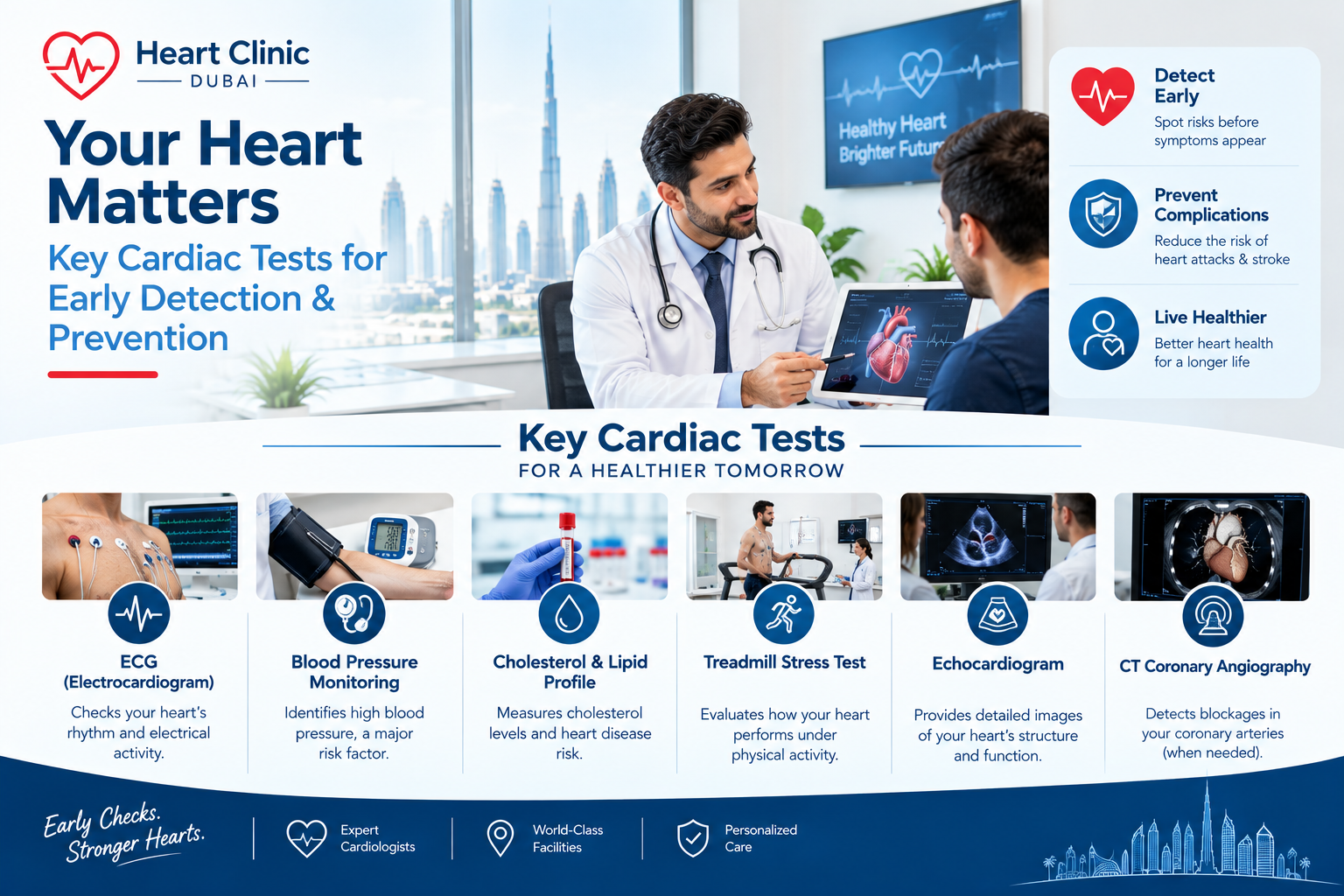
Introduction Heart disease often develops silently for years before any symptoms appear, which is exactly why early detection through proper testing matters so much. A dedicated Heart clinic in Dubai offers the specific tests needed to catch problems before they become serious. This blog covers the key cardiac tests that support early detection and prevention. Why Early Detection Matters So Much for Heart Health Many risk factors for heart disease, including high blood pressure and elevated cholesterol, produce no noticeable symptoms in their early stages. Left unaddressed, these silent risk factors can gradually damage the cardiovascular system, making early testing one of the most effective tools available for preventing serious cardiac events later in life. What Heart Health Checks Should People Get Regularly Before Symptoms Develop Regular blood pressure checks, cholesterol and lipid panel testing, blood sugar screening, and an electrocardiogram to assess heart rhythm form the foundation of preventive cardiac care. Depending on age and risk factors, additional tests like a stress test or echocardiogram may also be recommended even before symptoms appear. Basic Screening Everyone Should Have Blood pressure measurement at every routine checkup Cholesterol and lipid profile testing periodically Blood sugar testing to screen for diabetes-related heart risk Resting electrocardiogram to check heart rhythm Body mass index and waist circumference assessment More Advanced Cardiac Testing For individuals with risk factors like family history, high blood pressure, or diabetes, more advanced tests such as a treadmill stress test, echocardiogram, or coronary calcium scoring may provide deeper insight into heart health than basic screening alone. A Cardiologist in UAE can determine which of these tests are appropriate based on your specific risk profile. What Heart Tests Should I Get Before I Have Any Symptoms For most adults without symptoms, starting with blood pressure, cholesterol, and blood sugar screening in their thirties, combined with a baseline ECG, provides a solid foundation. Those with family history or other risk factors often benefit from earlier and more frequent advanced testing, even in the complete absence of symptoms. Understanding Your Personal Risk Factors Family history, lifestyle habits, weight, and existing conditions like diabetes or high blood pressure all influence how aggressively cardiac screening should be pursued. A thorough conversation with your doctor about these factors helps determine the right testing schedule for your specific situation rather than following a generic recommendation. Making Prevention a Consistent Habit Heart health testing works best as an ongoing habit rather than a one-time check, since risk factors can develop or change over time. Building regular cardiac screening into your overall healthcare routine gives you the best chance of catching issues while they remain easily manageable. How Age Affects Recommended Testing Testing recommendations generally become more frequent and comprehensive with age, reflecting the natural increase in cardiovascular risk over time, though individuals with strong family history or existing risk factors may need earlier and more frequent screening regardless of age. The Connection Between Lifestyle and Test Results Diet, exercise habits, smoking status, and stress levels all directly influence cardiac test results, meaning that testing also serves as valuable feedback on how well current lifestyle choices are supporting long-term heart health. What Happens When a Test Reveals a Concern When a screening test reveals an early warning sign, such as slightly elevated cholesterol or blood pressure, doctors can often address it through lifestyle changes and monitoring before medication or more intensive intervention becomes necessary. Making Heart Health a Family Conversation Given the strong role family history plays in cardiovascular risk, discussing your family’s heart health history openly with your doctor helps ensure your testing and prevention plan accounts for risks that might not be obvious from your personal health alone. Taking the First Step Toward Prevention Simply scheduling a baseline cardiac screening, even without any current concerns, is often the single most valuable step someone can take toward long-term heart health, since it establishes a reference point for tracking any future changes. Why Waiting Is the Riskiest Choice Postponing cardiac screening because symptoms have not yet appeared is precisely the mindset that allows silent risk factors to progress unchecked, making early testing one of the simplest and most effective health decisions available. A Small Investment for Long-Term Peace of Mind The time and cost involved in basic cardiac screening are minimal compared to the peace of mind, and potential life-saving early detection, that a thorough evaluation can provide. Conclusion Heart disease is far easier to prevent or manage when caught early, which is exactly what regular testing at a proper Heart clinic in Dubai makes possible. Understanding which tests matter most for your risk profile helps you stay ahead of potential problems. Zen Life Polyclinic’s cardiac team provides thorough, personalized screening designed for early detection and genuine prevention.

Gynecologist in UAE: essential women’s health checkups at every life stage
Introduction Women’s health needs shift significantly across different life stages, from the reproductive years through pregnancy and eventually menopause. A trusted Gynecologist in UAE understands these transitions and adjusts care accordingly rather than applying the same checklist regardless of age or life stage. This blog covers what essential checkups should include at each stage of life. Why Life Stage Matters So Much in Women’s Health The health priorities of a woman in her twenties differ substantially from those in her forties or sixties, spanning everything from fertility considerations to menopause management. A gynecologist who tailors care to these changing needs provides far more relevant and useful guidance than a generic, one-size-fits-all approach. What Should an Annual Gynecology Appointment Cover Beyond Routine Checks Beyond a basic pelvic exam, a thorough annual appointment should include cervical screening at appropriate intervals, breast health assessment, discussion of menstrual health and any irregularities, contraception or family planning conversations relevant to your life stage, and screening for hormonal or reproductive conditions based on your specific symptoms and history. Checkups During the Reproductive Years For women in their reproductive years, appointments often focus on menstrual health, fertility planning, contraception options, and screening for conditions like polycystic ovary syndrome or endometriosis that can affect both comfort and fertility if left unaddressed. Checkups During Pregnancy and Postpartum Regular prenatal checkups tracking maternal and fetal health Screening for pregnancy-related conditions like gestational diabetes Postpartum recovery assessment and support Guidance on returning to regular gynecological care after delivery Discussion of future family planning if relevant What Should a Gynecologist Check Every Year At minimum, an annual visit should include a pelvic exam, breast check, blood pressure assessment, and a conversation about any changes in menstrual patterns, sexual health, or general wellbeing since the last appointment. Additional tests like cervical screening are added at recommended intervals rather than every single year. Checkups During Perimenopause and Menopause As women approach and enter menopause, appointments increasingly focus on managing symptoms like hormonal changes, bone health, and cardiovascular risk, which tend to shift meaningfully during this life stage. A Best gynecology clinic in Dubai experienced in menopause management can offer targeted support during this often-underdiscussed transition. Building Comfort and Trust Over Time Many women feel hesitant to discuss certain symptoms or concerns, which is exactly why building a comfortable, trusting relationship with a consistent gynecologist over time leads to more honest conversations and, ultimately, better care. Why Open Communication Matters at Every Stage Many women hesitate to bring up symptoms related to sexual health, mood changes, or menstrual irregularities, often assuming these are not worth mentioning. A good gynecologist actively encourages this kind of openness, since these details often provide important clues about overall health. Addressing Common Concerns Without Embarrassment Conditions like irregular periods, pelvic pain, or changes in libido are common concerns that deserve straightforward, judgment-free conversations rather than being dismissed as minor or embarrassing topics unworthy of discussion. The Value of Preventive Screening Over Reactive Care Catching conditions like cervical changes or early hormonal imbalances through regular screening, before symptoms become severe, generally leads to simpler, more effective treatment than waiting until a problem becomes impossible to ignore. Choosing a Clinic That Feels Right for You Comfort with your provider directly affects how much you share during appointments, which in turn affects the quality of care you receive, making the right clinic fit just as important as clinical qualifications alone. Encouraging Younger Women to Start Early Establishing a relationship with a gynecologist early in adulthood, rather than waiting until pregnancy or a specific problem arises, gives women a head starts on preventive care and a provider who already understands their baseline health. Why Consistency Across Appointments Builds Better Care Returning to the same gynecologist year after year allows for more accurate tracking of subtle changes over time, which a first-time provider would have no baseline to compare against. Making Time for Appointments a Priority Busy schedules often push annual gynecological visits to the bottom of the list, but treating this appointment with the same priority as any other essential health commitment protects against preventable issues going unnoticed. A Lifelong Partnership with Your Provider Thinking of gynecological care as a lifelong partnership, rather than a series of disconnected visits, reflects how genuinely valuable a consistent, trusted provider becomes over the decades. Encouraging Daughters and Younger Family Members Many women first learn the importance of regular gynecological care from mothers or older relatives, making open conversations across generations a valuable way to normalize preventive checkups from a younger age. Conclusion Women’s health needs evolve throughout life, and a good Gynecologist in UAE adapts care to match each stage rather than treating every visit the same. Zen Life Polyclinic supports women through every life stage with thoughtful, tailored gynecological care.

General physician in Dubai: the importance of regular health checkups and ongoing care
Introduction Many people only see a doctor when something feels wrong, missing out on the real value that comes from an ongoing relationship with the same physician over time. A trusted General physician in Dubai does more than treat illness; they build a long-term picture of your health that supports better care decisions. This blog explains why regular checkups and continuity matter so much. What Makes a General Physician Different from Occasional Care A general physician acts as your primary point of contact for overall health, coordinating care, tracking changes over time, and referring you to specialists when needed. This ongoing relationship allows them to notice subtle changes in your health that someone seeing you for the first time might easily miss. Why Does Seeing the Same General Physician Over Time Produce Better Health Outcomes Continuity of care allows a physician to build a detailed understanding of your medical history, lifestyle, and risk factors, which improves the accuracy of diagnoses and the relevance of health advice given. Studies consistently show that patients with a consistent primary care relationship tend to catch health issues earlier and manage chronic conditions more effectively. The Role of Regular Checkups Routine checkups catch problems like high blood pressure, elevated cholesterol, or early signs of diabetes long before symptoms would prompt a visit on their own. These conditions often develop silently, which is exactly why proactive checkups matter more than waiting for something to feel wrong. What a Comprehensive Checkup Typically Covers Blood pressure and general cardiovascular health assessment Blood tests for cholesterol, blood sugar, and general wellness markers Review of current medications and any side effects Discussion of lifestyle factors like diet, exercise, and sleep Screening appropriate to your age, gender, and risk factors Why Should I See the Same Doctor Every Time Seeing the same doctor consistently means less time spent repeating your medical history at every visit and more time discussing what actually matters for your current health. It also builds trust, making it easier to discuss sensitive topics honestly rather than starting from scratch with someone new each time. Finding the Best General Physician for Your Needs Choosing a Best general physician in Dubai for your ongoing care involves considering their communication style, availability, and whether they take time to genuinely listen rather than rushing through appointments. A good fit makes it far easier to stay engaged with your own healthcare over the long term. Building a Habit of Preventive Care Making regular checkups a consistent habit, rather than an occasional afterthought, is one of the simplest ways to protect long-term health. Even when you feel perfectly healthy, these visits provide a baseline that becomes valuable if something does eventually change. How Continuity Improves Chronic Condition Management For patients managing ongoing conditions like high blood pressure or diabetes, seeing the same physician consistently allows for more precise adjustments to treatment based on a clear understanding of what has and has not worked previously, rather than restarting the evaluation process with each new provider. The Emotional Value of a Trusted Doctor Relationship Beyond the clinical benefits, having a physician you trust and feel comfortable with makes it easier to be honest about symptoms, lifestyle habits, or concerns that might otherwise feel embarrassing to discuss with someone unfamiliar. What to Look for When Choosing a Long-Term Physician Consider factors like communication style, appointment availability, and whether the physician takes a genuinely thorough approach to checkups rather than rushing through standard questions. These factors matter significantly for a relationship you intend to maintain over years. Making Checkups a Non-Negotiable Habit Treating annual or biannual checkups as a fixed commitment, similar to any other important appointment, rather than something to reschedule indefinitely, ensures the preventive benefits of regular care are not lost to a busy schedule. Why This Matters Even When You Feel Healthy It is easy to skip checkups when nothing feels wrong, but many of the conditions a general physician screens for produce no symptoms until they have already progressed, making feeling fine an unreliable indicator of actual health status. Balancing Convenience with Quality of Care Location and appointment flexibility matter for staying consistent with checkups, but they should not come at the expense of finding a physician who genuinely takes the time to listen and investigate concerns thoroughly. Making the First Appointment Count An initial appointment that includes a thorough review of your medical history and current health status sets a strong foundation for every future visit, making this first meeting worth prioritizing rather than rushing through. Conclusion The relationship you build with a General physician in Dubai over time is genuinely one of the most valuable assets in your overall healthcare. Regular checkups and continuity lead to earlier detection and better long-term outcomes. Zen Life Polyclinic’s general physicians focus on building these lasting, trusted relationships with every patient.

Pediatric healthcare in Dubai: essential care for every stage of your child’s growth
Introduction Children’s health needs change constantly as they grow, and what works for a newborn looks nothing like what a ten-year-old needs from their doctor. Good Pediatric healthcare services in UAE are built around this constant evolution, adapting care to match each stage of a child’s development. This blog walks through what essential pediatric care looks like from infancy through the teenage years, so parents know what to expect and when. Why Pediatric Care Needs to Be Stage-Specific A newborn’s body and immune system work very differently from a school-aged children, and treating every young patient the same way misses important developmental milestones and risk factors specific to each age group. Pediatricians are trained to recognize these differences and adjust everything from physical exams to vaccination schedules accordingly. How Does Pediatric Healthcare Need to Adapt as Children Move Through Different Growth Stages In infancy, care focuses heavily on growth monitoring, vaccination schedules, and early developmental milestones. As children move into toddler and school years, focus shifts toward nutrition, vision and hearing screening, and monitoring developmental and behavioral progress. During adolescence, care expands to include physical, emotional, and social changes, along with more independence in managing personal health. Infancy: The Foundation Years The first year of life involves frequent checkups tracking weight, height, and head circumference, alongside a structured vaccination schedule that protects against serious childhood illnesses. Pediatricians also closely monitor feeding, sleep patterns, and early developmental signs like rolling over, sitting up, and responding to sounds and faces. Early Childhood: Building Healthy Habits Regular growth and developmental milestone tracking Continued vaccination schedule through early childhood Vision and hearing screening as children start school Nutrition guidance to support active growth Monitoring for early signs of allergies or chronic conditions School Age: Growth, Learning, and Prevention As children enter school, pediatric visits often shift toward monitoring how physical growth aligns with expected patterns, screening for learning or attention difficulties, and addressing common childhood illnesses that spread more easily in school environments. This is also when many parents first raise concerns about behavior, focus, or social development. How Does Children’s Healthcare Change as They Get Older By the teenage years, healthcare shifts to include conversations about puberty, mental health, and encouraging teens to take more ownership of their own health decisions. Pediatricians at this stage often balance parental involvement with growing patient independence, addressing topics that younger children would not yet need to discuss. Adolescence: Preparing for Independence Teenage healthcare involves more nuanced conversations around physical changes, emotional wellbeing, and healthy lifestyle habits that will carry into adulthood. A trusted Pediatric healthcare clinic in Dubai creates a comfortable environment where teens feel able to discuss sensitive topics honestly, which is essential for catching issues like anxiety or unhealthy habits early. The Value of Continuity Across These Stages Seeing the same pediatric provider throughout childhood allows for better tracking of growth patterns, family history, and developmental progress over time, compared to switching providers frequently and losing this continuity of care. The Role of Vaccinations Across Childhood Vaccination schedules are carefully designed to protect children at the specific ages when they are most vulnerable to certain illnesses, with booster doses added at later stages as immunity naturally wanes over time. Staying on schedule, rather than delaying or skipping doses, ensures children remain protected during the windows when they need it most. Supporting Parents Through Each Stage Good pediatric care extends beyond the child to support parents as well, offering guidance on everything from sleep training in infancy to managing screen time in later childhood. A pediatrician who takes time to address parental concerns, not just clinical measurements, provides genuinely valuable support throughout the parenting journey. Recognizing When Something Needs Attention Parents are often the first to notice subtle changes in behavior, appetite, or energy levels, and a good pediatric relationship makes it easy to raise these observations without feeling like a concern is too minor to mention. Early conversations about small changes often prevent bigger issues from developing unnoticed. Why Choosing the Right Clinic Matters A welcoming, child-friendly environment combined with genuinely experienced pediatric staff makes a significant difference in how comfortable children feel during visits, which in turn affects how honest and cooperative they are during examinations as they grow older. Preparing Children for Their Own Healthcare Journey As children grow into teenagers and eventually adults, gradually involving them in conversations about their own health, rather than leaving every decision to parents, helps build lifelong habits of engaged, proactive healthcare management. A Partnership Between Parents and Pediatric Providers The most effective pediatric care happens when parents and providers work together as partners, sharing observations and concerns openly rather than treating visits as a one-way delivery of instructions from doctor to parent. Conclusion Every stage of childhood brings different health priorities, and truly comprehensive Pediatric healthcare services in UAE adapt accordingly rather than applying a one-size-fits-all approach. Zen Life Polyclinic supports families through every stage of this journey, from a baby’s first checkup through the more complex conversations of the teenage years.

Heart clinic in Dubai: early heart screenings that can make a difference.
Introduction Heart disease often develops silently for years before any noticeable symptoms appear, which is exactly why regular screening matters so much for long-term health. A trusted Heart clinic in Dubai gives patients the chance to catch risk factors early, well before a serious cardiac event forces the issue into urgent focus. This blog covers the key screenings worth knowing about, who should prioritize them, and when it makes sense to book an appointment even if you currently feel completely fine. Why Heart Screening Matters Even Without Symptoms Many of the most common cardiac risk factors, including high blood pressure, high cholesterol, and early arterial changes, produce no noticeable symptoms in their early stages. By the time symptoms such as chest pain or shortness of breath appear, underlying damage may already be significant. Regular screening closes this gap, identifying risk long before it becomes a genuine crisis. This is particularly important because many people feel entirely healthy right up until a serious cardiac event occurs, with no warning signs they were able to recognize in advance. What Heart Checkups Should You Get Regularly Before Symptoms Appear? A frequent question is what heart checkups should you get regularly before symptoms appear, particularly for people with a family history of heart disease. Blood pressure monitoring, cholesterol panels, blood sugar testing, and an ECG are standard components of a baseline cardiac screening that most adults should have periodically, with frequency increasing based on individual risk factors. More advanced tests, such as a stress test or coronary calcium scan, may also be recommended for patients with elevated risk based on their initial screening results. The Role of a Cardiologist in UAE in Preventive Care A Cardiologist in UAE does far more than treat existing heart conditions. Preventive cardiology focuses on identifying and managing risk factors before they progress, through lifestyle guidance, medication where appropriate, and more advanced testing when warranted by a patient’s specific risk profile or family history of cardiac disease. This proactive approach often makes the biggest long-term difference, since managing risk factors early tends to be far more effective than treating advanced heart disease after it has developed. Who Should Prioritize Regular Heart Screening While heart screening benefits everyone, certain groups should prioritize it more actively, including those with a family history of heart disease, diabetes, high blood pressure, or a sedentary lifestyle. Age is also a factor, with screening frequency generally increasing after 40, though younger patients with risk factors should not assume they are exempt from these conversations. What Heart Checkups Should I Be Getting Regularly? If you are wondering, what heart checkups should I be getting regularly, the safest approach is a conversation with your doctor about your personal risk profile rather than relying on a generic schedule found online. A cardiologist can recommend a screening interval tailored to your age, family history, and existing health conditions, adjusting it as your circumstances change over time. Making Heart Health Part of Your Routine Heart screening works best when it becomes a routine part of general health maintenance rather than something considered only after a scare. Pairing regular checkups with everyday habits like consistent exercise, balanced nutrition, and stress management gives the screening results even more value, since lifestyle changes can then be made well before problems develop. Small, sustainable changes made consistently over years tend to have a far bigger impact on long-term heart health than dramatic short-term efforts that are difficult to maintain. What a Cardiac Screening Appointment Actually Involves A typical cardiac screening appointment includes a review of your medical and family history, blood pressure measurement, blood tests to check cholesterol and blood sugar, and often a resting ECG to check your heart’s electrical activity. Based on these initial results, your cardiologist will advise whether further testing is warranted or whether your current risk level supports a longer interval before your next screening. The appointment itself is usually quick and non-invasive, which makes it an easy addition to a broader annual health check rather than a separate, intimidating process on its own. Why Family History Deserves a Closer Look Patients often underestimate how much family history shapes their own heart risk, assuming that feeling healthy now means they are in the clear regardless of their parents’ or siblings’ cardiac history. Sharing this information openly with your cardiologist allows for a more accurate risk assessment and a screening schedule that reflects your actual genetic and lifestyle risk rather than a generic assumption. Conclusion Heart disease is one of the few major health risks where early detection genuinely changes outcomes, often quite dramatically. Visiting a dependable Heart clinic in Dubai for regular screening is a small-time investment that can prevent serious complications years down the line. Zenlife Clinic connects patients with an experienced Cardiologist in UAE who takes preventive heart health seriously, helping you stay ahead of risk rather than reacting only after symptoms appear, with a screening schedule built around your own personal risk factors.

Women’s healthcare in UAE: why preventive care matters.
Introduction Preventive care looks different for women than it does for men, spanning reproductive health, hormonal changes, pregnancy, and conditions that present differently across a woman’s life stages. A dedicated Women healthcare specialist in UAE brings focused expertise to these needs, offering a level of attention that general practice settings are not always designed to provide. This blog explores why preventive, women-focused care matters and what it actually looks like in practice at a specialist clinic that understands these needs deeply. The Case for Specialist, Preventive Care Preventive care for women covers a wide range of areas, from reproductive health screening to bone density, hormonal balance, and cardiovascular risk factors that can present differently in women than in men. A specialist approach means these areas are addressed together, rather than each requiring a separate referral or a fragmented picture of overall health scattered across different providers. This joined-up approach also makes it easier to spot patterns across different areas of health that might otherwise be missed if each concern were treated in complete isolation. What Benefits Do Women’s Specialist Clinics Offer Over General Hospital Departments? People often ask what benefits do women’s specialist clinics offer over general hospital departments, and the answer usually comes down to focus and continuity of care. Specialist clinics tend to offer more time per appointment, doctors with deep experience in women’s health specifically, and a more private, comfortable setting for sensitive conversations that can feel rushed in a busier general hospital environment. Supporting Every Stage of Life Women’s healthcare needs shift considerably across different life stages, from adolescence and family planning through pregnancy, postpartum recovery, and eventually menopause. A Women healthcare specialist in UAE is equipped to support each of these stages with relevant screening, advice, and treatment, rather than treating every visit as a generic, one-size-fits-all check-up. This continuity means your care team already understands your history when a new concern arises, rather than starting the conversation from zero each time. The Role of a Pregnancy Care Clinic in UAE For women who are pregnant or planning to be, a dedicated Pregnancy care clinic in UAE offers continuity of care from preconception through delivery and postpartum recovery. This consistency allows the same care team to track a pregnancy closely, spotting any concerns early and building a trusted relationship throughout what is often an emotionally significant and sometimes overwhelming time. Having one familiar team throughout pregnancy also reduces the stress of repeating your history and preferences to a new provider at each stage. Why Should Women Choose a Specialist Clinic Over a General Hospital? So why should women choose a specialist clinic over a general hospital for their ongoing care? The main reasons are depth of expertise, more personalised attention, and an environment specifically designed around women’s comfort and privacy, all of which contribute to better long-term engagement with preventive care rather than avoidance of appointments altogether. What to Look for When Choosing a Clinic When evaluating a women’s health clinic, consider the range of services offered under one roof, the experience of the doctors on staff, and how comfortable the environment feels during a first visit. A clinic that can support you across pregnancy, general gynecology, and broader preventive health needs saves you from having to coordinate care across multiple, unfamiliar providers as your needs change over time. Making Preventive Visits a Consistent Habit The biggest barrier to preventive women’s healthcare is often simply not scheduling the visit in the first place, rather than any concern about the appointment itself. Setting a recurring reminder, ideally tied to a birthday or another easy-to-remember date, helps turn preventive care into a consistent yearly habit rather than something that keeps getting pushed to next month. Bringing a partner, family member, or friend along for support can also make it easier to follow through on booking and attending these appointments consistently. The Long-Term Payoff of Preventive Care Women who maintain consistent preventive care over the years tend to catch issues earlier and manage chronic conditions more effectively than those who only seek care once symptoms become impossible to ignore. This long-term payoff is rarely visible in a single appointment, but it compounds significantly across a lifetime of consistent, specialist-led care that adapts as your needs evolve over time and grow with each new stage of life. Conclusion Preventive, women-focused healthcare leads to earlier detection, better long-term outcomes, and a more comfortable overall experience for patients navigating these appointments. Choosing a dedicated Women healthcare specialist in UAE ensures that care is tailored to the realities of a woman’s health across every stage of life. Zenlife Clinic’s Pregnancy care clinic in UAE and broader women’s health services are built around this same principle of continuity, comfort, and genuine specialist expertise for every patient who walks through the door.
Dental care in Dubai: common treatments that are better done early
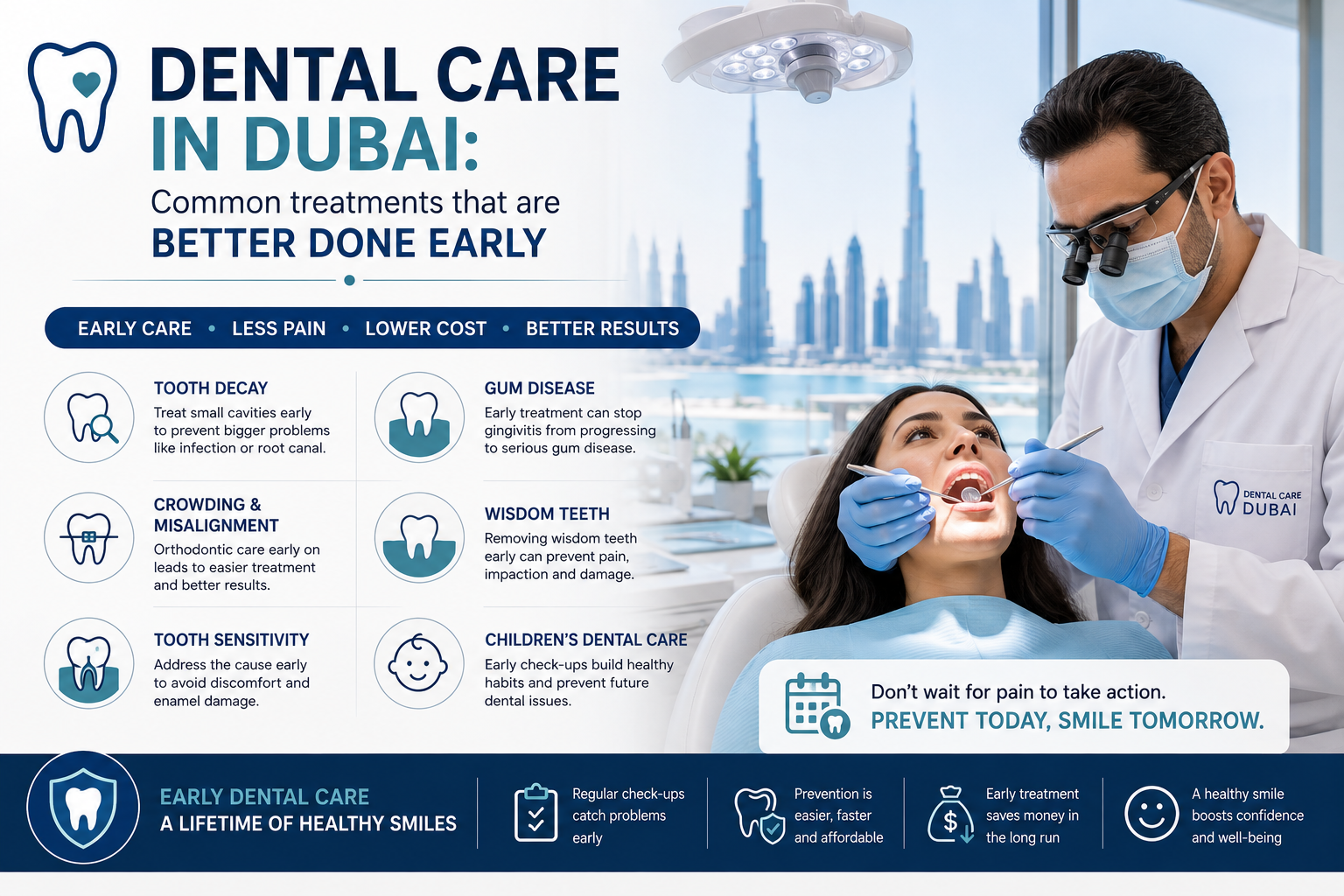
Introduction It is easy to put off a dental appointment when nothing hurts, but many common dental problems are far easier and less expensive to treat when caught early. Dental care in Dubai has advanced significantly in recent years, giving patients more comfortable, efficient options than ever before, but those benefits only apply if treatment happens before a small issue becomes a much bigger one. This blog looks at the treatments most commonly delayed, why acting sooner rather than later almost always pays off, and how a modern clinic makes early treatment easier than people expect. Cavities: Small Problems That Grow Quickly A small cavity caught early can often be treated with a simple, quick filling that takes only minutes. Left untreated, that same cavity can grow deeper, eventually reaching the nerve of the tooth and requiring root canal treatment or even extraction. What starts as a minor, painless issue can turn into a much more involved and costly procedure simply because of delay. The difference in treatment time, cost, and discomfort between an early filling and a late-stage root canal is significant, which makes regular check-ups one of the best investments in long-term dental health. What Dental Treatments Do People in Dubai Delay and What Does That Delay Cost Them? When people ask what dental treatments do people in Dubai delay and what does that delay cost them, the most common answers are routine cleanings, small cavity fillings, and gum disease treatment. Postponing these often leads to more invasive procedures later, longer treatment times, and significantly higher costs compared to addressing the issue when it was first noticed by a dentist. Beyond the financial cost, delayed treatment often means more discomfort and more time away from work or daily activities for the more extensive procedure that follows. Gum Disease and Its Silent Progression Early gum disease, known as gingivitis, is usually painless and easy to reverse with improved hygiene and a professional cleaning. Left unaddressed, it can progress to periodontitis, a more serious condition that damages the bone supporting the teeth and can eventually lead to tooth loss. Regular check-ups catch this progression early, when treatment is still simple and non-invasive. Because gum disease rarely causes pain in its early stages, many patients are surprised to learn how far it has progressed, which is exactly why professional monitoring matters more than relying on symptoms alone. What Dental Treatments Should I Not Delay Getting in Dubai? If you are asking, what dental treatments should I not delay getting in Dubai, the honest answer is almost any recommended treatment, since dental problems rarely improve on their own without intervention. Cracked teeth, persistent sensitivity, bleeding gums, and visible decay are all signs that a visit is overdue and should not be pushed further down the priority list. The Value of an Advanced Dental Care Clinic in UAE Modern equipment and techniques mean that many treatments patients used to dread are now faster and more comfortable than they expect. An Advanced dental care clinic in UAE can often complete procedures in fewer visits, with less discomfort, than was possible even a decade ago, removing one of the biggest reasons people avoid the dentist in the first place. Digital imaging, precision tools, and improved anaesthetic techniques all contribute to a noticeably different patient experience compared to older-style dental practices, making even more involved treatments far less intimidating than patients often assume. Building a Habit of Regular Check-Ups The single most effective way to avoid delayed treatment is a simple habit: scheduling a check-up every six months regardless of whether anything feels wrong. These routine catches problems while they are still small, painless, and inexpensive to address, turning dental care from an occasional emergency into a manageable, predictable part of general health maintenance. Patients who keep to this schedule consistently report fewer emergency visits and lower overall dental costs across the years, simply because problems are caught and treated while they are still minor. How Children’s Dental Habits Set the Tone for Life Early dental habits established in childhood tend to carry through into adulthood, which is why encouraging regular check-ups from a young age matters so much. Children who grow up comfortable with routine dental visits are far more likely to maintain that same consistency later, rather than developing the anxiety around dental care that leads many adults to delay treatment for years. Conclusion The pattern is consistent across almost every dental condition: earlier treatment is simpler, more comfortable, and less expensive than waiting. Choosing reliable Dental care in Dubai and attending regular check-ups is one of the easiest ways to avoid painful, costly surprises down the line. Zenlife Clinic’s Advanced dental care clinic in UAE combines modern technology with a comfortable patient experience, making it easier to stay on top of your dental health before small issues grow into bigger, more expensive ones.

What To Expect During Your Annual Gynecologist Visit
Introduction Many women put off their annual gynecology check-up simply because they are not sure what to expect, and that uncertainty can turn a routine appointment into a source of unnecessary anxiety. Seeing a Gynecologist in UAE once a year is one of the simplest, most effective steps a woman can take for her long-term health, catching potential issues long before they become serious problems. This blog walks through exactly what a typical annual visit involves, from the conversation at the start to the physical examination itself, so you can walk into your appointment feeling informed and prepared rather than unsure of what is coming next. Why an Annual Visit Matters So Much An annual gynecology visit is about far more than reproductive health alone. It is an opportunity to screen for a range of conditions, discuss changes in your body, and address concerns you may have been putting off asking about for months or even years. Many conditions, from hormonal imbalances to early signs of certain cancers, are far easier to treat when caught early through regular screening rather than discovered later after symptoms appear. Regular visits also build a relationship with your doctor over time, which makes it easier to have open, honest conversations about sensitive topics as they come up, rather than feeling like you are starting from scratch with a new provider every time something concerns you. What Should an Annual Gynecology Visit Include for Women in the UAE? A common question is what should an annual gynecology visit include for women in the UAE, and the answer typically covers a review of menstrual history, a physical examination, and screening tests appropriate for your age and health background, such as a pap smear or breast examination. Your doctor will also ask about family planning goals, contraception, and any symptoms you may have noticed since your last visit. Depending on your age and history, additional tests such as bone density screening or hormone panels may also be recommended as part of a complete preventive picture. What Happens During an Annual Gynecologist Visit? For anyone wondering what happens during an annual gynecologist visit, the appointment generally starts with a conversation about your general health, followed by the physical components of the exam. Your doctor will explain each step before it happens, and you are always welcome to ask questions or pause if anything feels unclear or uncomfortable at any point during the visit. Most appointments are shorter than people expect, and many patients find that the conversation itself, rather than the physical exam, ends up being the most valuable part of the visit, since it is a chance to discuss things that are easy to overlook in daily life. Choosing the Right Gynecology Specialist Clinic in Dubai Finding the right Gynecology specialist clinic in Dubai makes a real difference to how comfortable you feel attending these appointments regularly. Look for a clinic with a warm, private environment, doctors who take time to explain things clearly, and flexibility around scheduling that fits around your work and family life, since consistency matters more than any single visit. A clinic that makes you feel heard, rather than rushed, is far more likely to keep you coming back for the regular screening that actually protects your health over the long term. Preparing for Your Appointment A little preparation goes a long way toward making the most of your visit. Tracking your last few menstrual cycles, noting any symptoms or concerns, and writing down questions in advance all help ensure nothing important gets forgotten once you are in the room and the conversation is underway. It is also worth mentioning any family history of reproductive health conditions, since this can shape which screenings your doctor recommends and how frequently they suggest you return for follow-up care. What to Do If You Feel Anxious About the Visit It is completely normal to feel a little nervous before a gynecology appointment, particularly if it has been a while since your last one or if you are seeing a new doctor for the first time. Telling your doctor how you feel at the start of the appointment often helps, since most providers are happy to slow down, explain more, or adjust the pace of the exam to help you feel more at ease throughout. Conclusion An annual gynecology visit does not need to be a source of stress once you know what to expect from start to finish. Seeing a trusted Gynecologist in UAE regularly is one of the most reliable ways to protect your long-term health and catch potential concerns early, when they are easiest to treat. Zenlife Clinic offers a welcoming, private Gynecology specialist clinic in Dubai where every visit is approached with care, respect, and clear communication, making it easier to stay consistent with the preventive care that matters most.
Which Pediatric Healthcare Clinic in Dubai Covers All Age Groups? A Complete Guide
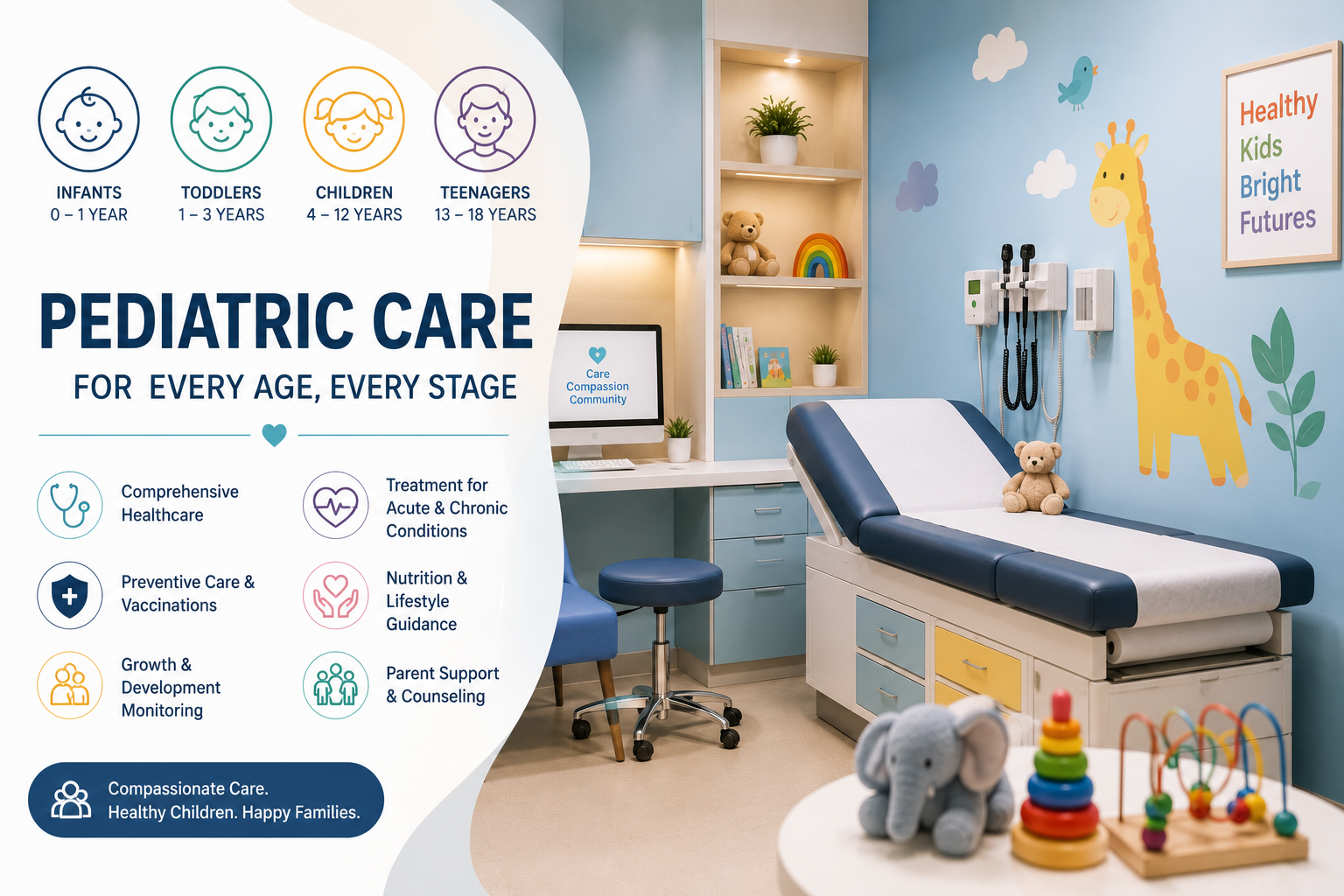
Introduction Children’s healthcare needs shift dramatically from infancy through the teenage years, and finding a single Pediatric healthcare clinic in Dubai that can genuinely support your child at every stage saves parents significant time and hassle. This complete guide explores what full-spectrum Pediatric healthcare services in UAE should actually cover, and what to look for when choosing a long-term pediatric care partner for your growing family. Why Continuity Matters So Much in Pediatric Care A pediatrician who follows your child from infancy through adolescence builds a genuinely valuable understanding of their growth patterns, developmental milestones, and family health history. This continuity makes it far easier to spot subtle changes that might otherwise go unnoticed by a new provider seeing your child for the first time. Parents also benefit from this continuity, since a familiar pediatrician becomes a trusted resource for questions that arise between formal appointments, not just during scheduled checkups. This trust extends to the child as well, who often feels more at ease with a familiar face they have seen since their very first appointment years earlier. What Pediatric Healthcare Services Are Offered from Infancy Through Teenage Years in Dubai Parents often ask what pediatric healthcare services are offered from infancy through teenage years in Dubai, and comprehensive care typically spans newborn checkups and vaccination schedules, developmental screening throughout early childhood, management of common childhood illnesses, and eventually adolescent health concerns including growth, puberty, and mental health support. Nutrition guidance also evolves considerably across these stages, from infant feeding support through to counseling on healthy eating habits during the teenage years. This full spectrum of services means parents never need to search for a new provider simply because their child has grown into a new developmental stage. Vaccination tracking in particular benefits from this continuity, since a single provider can ensure no doses or boosters are ever missed across the years. Which Pediatric Healthcare Clinic in Dubai Covers All Age Groups This is an important question for any parent to ask directly. Which pediatric healthcare clinic in Dubai covers all age groups often comes down to whether the practice has pediatricians experienced specifically with each developmental stage, rather than a generalist approach that may not fully address the unique needs of infants versus teenagers. It also helps to ask how the clinic handles the transition as children grow older, ensuring the shift from pediatric to adolescent-focused care feels seamless rather than jarring. Key Pediatric Services Worth Asking About Newborn care and comprehensive vaccination schedules. Developmental screening throughout early childhood. Management of common childhood illnesses and allergies. Adolescent health services including puberty and mental health support. Nutritional guidance appropriate to each specific age group. Coordination with specialists when more complex care is needed. School readiness and behavioral development assessments. What Makes Pediatric Healthcare Services in UAE Stand Out Beyond clinical services, a genuinely excellent pediatric practice creates an environment where children feel comfortable, from a welcoming waiting area to a communication style that helps young patients feel less anxious about medical visits. This emotional comfort genuinely matters, since a child who dreads doctor visits may avoid disclosing symptoms or concerns honestly. Staff who genuinely enjoy working with children, and who take time to explain procedures in age-appropriate language, make a noticeable difference in how comfortable young patients feel during every visit. This comfort factor often shapes a child’s attitude toward healthcare well into adulthood, making early positive experiences genuinely valuable in the long run. Building a Long-Term Pediatric Care Relationship Choosing a clinic capable of supporting your child from their very first checkup through their teenage years means fewer disruptive transitions and a genuinely more informed, continuous approach to their healthcare throughout childhood. This continuity also builds genuine trust between the child and their doctor over time, often making visits far less stressful for both the child and the parent as the years go on. Preparing for Your Child’s Next Milestone A pediatric team that understands upcoming developmental milestones can proactively guide parents through what to expect next, whether that means introducing solid foods, preparing for school vaccinations, or discussing changes that come with adolescence well before they arrive. This kind of proactive guidance gives parents genuine confidence heading into each new stage, rather than feeling caught off guard by changes they were not prepared for. Parents who feel well-prepared for each milestone also tend to report less anxiety overall about their child’s development and health. Conclusion Finding a single trusted partner for your child’s healthcare journey, from infancy through the teenage years, makes a genuine difference in the quality and continuity of care they receive. Zen Life Clinic provides exactly this kind of comprehensive Pediatric healthcare clinic in Dubai, delivering full-spectrum Pediatric healthcare services in UAE for every stage of your child’s growth and development.

What Comprehensive Women’s Healthcare Should Actually Include for Gynecology
Introduction Women’s healthcare needs change significantly across different life stages, from adolescence through pregnancy and into menopause and beyond. A truly comprehensive best gynecology clinic in Dubai should be equipped to support women through every one of these stages, not just address isolated concerns as they arise. This blog explores what genuinely comprehensive care from a Gynecology specialist clinic in Dubai should include, and why this breadth of service matters so much for long-term wellbeing and peace of mind. Why Comprehensive Care Matters More Than Isolated Visits Many women only seek gynecological care when a specific problem arises, missing the value of regular preventive screening and ongoing relationship-building with a trusted provider. Comprehensive care means having a consistent point of contact who understands your full health history across every life stage, not just whatever concern prompted today’s visit. This ongoing relationship also makes it easier to notice gradual changes, such as shifts in menstrual patterns or emerging symptoms, that might otherwise be dismissed as unrelated if seen by a different provider each time. Preventive screenings in particular benefit enormously from this consistency, since a provider familiar with your baseline results can more easily identify meaningful changes over successive visits and years. What Services Define the Best Gynecology Clinic in Dubai for Comprehensive Care This is worth exploring in real detail. What services define the best gynecology clinic in Dubai for comprehensive care typically includes routine screenings like Pap smears and breast exams, family planning and contraception counseling, fertility evaluation and support, pregnancy care, and management of conditions like menopause, endometriosis, or polycystic ovary syndrome. A genuinely comprehensive clinic also provides mental health support and counseling where relevant, recognizing that women’s health encompasses emotional and psychological wellbeing alongside physical care. This breadth of service means patients rarely need to seek care elsewhere for related concerns, keeping their full health picture within one coordinated, trusted practice. It also means less time spent repeating medical history to multiple different providers across separate practices. Which Is the Best Gynecology Clinic in Dubai Many women naturally ask which is the best gynecology clinic in Dubai before choosing a provider. Looking at the breadth of services offered, the qualifications and communication style of the physicians, and how comfortable you feel discussing sensitive topics openly all matter more than convenience alone. Reading about a clinic’s approach to patient education and involvement in decision-making also offers useful insight into how genuinely patient-centered their care philosophy really is. Speaking with current patients directly, where possible, often reveals details about the day-to-day patient experience that marketing materials simply cannot capture. Care Across Every Life Stage Adolescent gynecological care and reproductive health education. Family planning, contraception, and preconception counseling. Comprehensive pregnancy and prenatal care. Management of menopause and related hormonal changes. Screening and treatment for common gynecological conditions. Ongoing support for chronic conditions like endometriosis or PCOS. Postmenopausal health monitoring and bone density screening. Why a Trusted Gynecology Specialist Clinic in Dubai Matters Gynecological care often involves deeply personal conversations, which means comfort and trust with your provider genuinely affect the quality of care you receive. A Gynecology specialist clinic in Dubai that prioritizes clear communication and genuine patient comfort tends to produce better outcomes, since patients are more likely to disclose relevant symptoms and concerns openly. This comfort factor becomes especially important during sensitive discussions around fertility, sexual health, or menopausal symptoms, where hesitation to speak openly can genuinely delay proper diagnosis and treatment. Clinics that take the time to create a genuinely welcoming, non-judgmental environment tend to see patients return consistently for preventive care rather than avoiding visits until a problem becomes urgent and harder to treat effectively. Building a Long-Term Relationship with Your Gynecologist Just as with primary care, continuity matters significantly in gynecological health. A provider who has followed your health history across pregnancies, hormonal changes, or ongoing conditions is far better positioned to notice subtle but important changes over time. This long-term perspective often proves invaluable when navigating major transitions like family planning decisions or the onset of perimenopause, where having a trusted, familiar provider makes these conversations considerably easier. Patients who maintain this kind of long-term relationship often report feeling more confident and comfortable during even the most sensitive consultations, year after year. Why Trusted Care Continuity Changes Outcomes Beyond comfort, the medical value of continuity cannot be overstated. A provider who has tracked your health across years is simply better equipped to notice patterns, flag emerging risks, and personalize recommendations than one meeting you for the very first time. Conclusion Comprehensive women’s healthcare means far more than addressing isolated symptoms as they appear. It means having a trusted partner supporting you through every stage of your reproductive and hormonal health journey, from adolescence through menopause and beyond. Zen Life Clinic operates as a genuinely comprehensive best gynecology clinic in Dubai, providing the full range of care expected from a dedicated Gynecology specialist clinic in Dubai.